FREE DELIVERY ON ALL ORDERS OVER £50

How to Make Soy Scented Candles by Hand: A Complete Beginner’s Guide
How to make soy scented candles by hand- Learn how to make soy scented candles by hand with this easy beginner’s guide. Discover the key steps, temperatures and tips used by artisan candle makers to create beautiful homemade candles and thoughtful handmade gifts
Wicker Lane Candle Co
12/4/2025
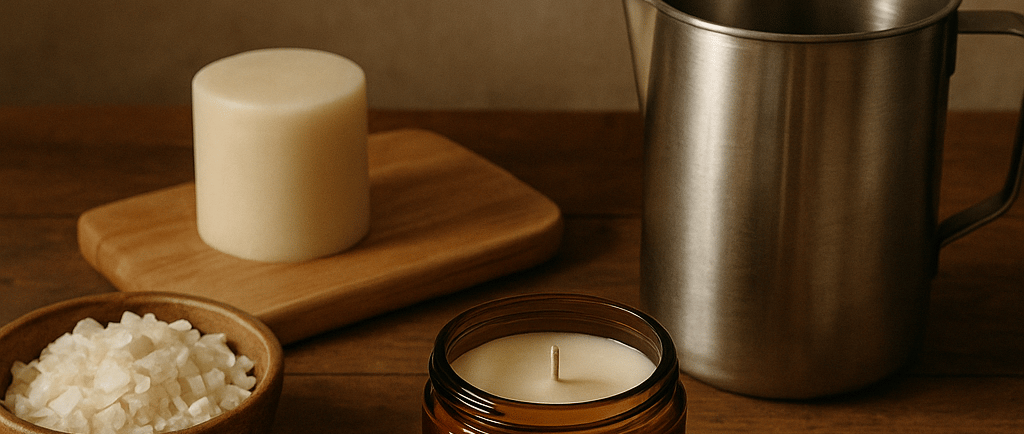
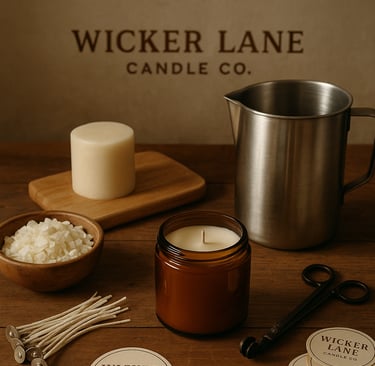
How to Make Soy Scented Candles by Hand: A Beginner’s Guide to Beautiful Homemade Gifts
There’s something undeniably special about a handmade soy candle. Whether you’re creating a personal gift, exploring a new craft, or simply curious about how artisan candle makers work behind the scenes, making soy candles by hand is a rewarding and calming process. As a natural, renewable, and clean-burning wax, soy has become the preferred choice for small candle makers and eco-conscious shoppers alike.
In this guide, we’ll walk you through how soy scented candles are made by hand, the typical phases of the process, and why small-batch craftsmanship produces candles with character, personality, and exceptional fragrance quality.
Why Soy Wax?
Soy wax is a natural vegetable wax made from soybeans. Crafters love it because:
It burns cleaner than paraffin
It provides an excellent scent throw
It’s biodegradable and vegan
It adheres well to containers
It’s ideal for beginners and hobbyists
If you’re making candles at home, soy wax is one of the most rewarding and enjoyable waxes to work with.
Phase 1 — Preparing Your Workspace
Before any candle-making begins, preparation is essential. Candle makers always work in a clean, well-ventilated area and gather their tools before melting begins. These usually include:
A heat-proof melting pot (professionals often use electric melting furnaces)
Scales for measuring wax and fragrance
A thermometer
Stirring tools
Wicks and wick holders
Jars or candle containers
A heat gun or warming plate
While a hobbyist setup is often simple, small brands like ours refine their process for consistency, safety, and quality.
Phase 2 — Pre-warming the Jars
One of the key secrets to smooth, flawless soy candles is pre-warming the containers. This helps prevent frosting and encourages better adhesion between the wax and the glass.
A typical target temperature is around 50–60°C, achieved with either:
A warming plate
A low-heat oven
A heat gun
Warming ensures the wax cools more evenly, preventing sinkholes or rough tops. Professional candle makers rarely skip this step because it significantly improves the finished candle’s appearance.
Phase 3 — Weighing the Wax
Soy wax is normally measured in grams, especially for small-batch makers who value precision.
A standard candle might require:
150g–250g of soy wax
A carefully calculated amount of fragrance (often 7–12% of the wax weight)
Using weight rather than volume ensures each candle turns out the same every time. Consistency is what separates a casual hobby from artisan-level craftsmanship.
Phase 4 — Melting the Wax
Soy wax melts gently and evenly, usually in a double-boiler setup or a temperature-controlled wax melter. The goal isn’t speed — it’s precision.
Candle makers typically warm soy wax to a suitable melting temperature (often between 70°C–85°C, depending on the wax blend). During this phase:
The wax becomes smooth and translucent
It’s stirred occasionally to promote even heating
The candle maker monitors the thermometer constantly
Good soy candles come from steady temperatures, not rushing the melt.
Phase 5 — Adding the Fragrance Oil
This is the moment where a simple candle becomes a scented one — and also where craftsmanship makes the biggest difference.
Fragrance oil binds best with soy wax when added at an optimal temperature (commonly around 60°C–65°C, depending on the wax manufacturer’s recommendation).
Once added:
The wax is stirred slowly by hand
Stirring is steady but gentle (for best results at least 2 minutes or even more)
This ensures the fragrance binds properly and disperses evenly
This step is essential for achieving a strong hot throw and consistent cold throw, which determines how well a candle smells both lit and unlit.
Phase 6 — Positioning the Wick
Before the wax is poured, the wick must be secured inside the container. Handmade candle makers typically use:
Wick stickers
A glue gun
Metal wick holders or centering bars
A well-centered wick ensures:
An even burn
A clean flame
No tunnelling
It may seem like a small detail, but wick placement is one of the foundations of a quality candle.
Phase 7 — Pouring the Wax
Pouring soy wax is both practical and artistic. Candle makers pour at a temperature designed to minimise frosting and maximise smooth tops — often around 55°C–60°C, depending on the wax type.
Pouring too hot causes issues. Pouring too cold does the same.
This is where experience truly matters.
After pouring:
The surface is left undisturbed
The wick remains centred
The candle begins its slow, natural setting process
This is one of the most satisfying moments for candle makers — seeing liquid wax transform into a solid, creamy soy candle.
Phase 8 — Finishing Touches
Once the candle has fully set, makers apply finishing touches:
Re-centering the wick if needed
Fixing imperfections with a heat gun
Trimming the wick to the correct length
Adding labels or information stickers
Handmade candles often undergo multiple quality checks, ensuring they burn evenly, cleanly and beautifully.
Phase 9 — The Curing Process
Many people are surprised to learn that soy candles need time to cure. Just like perfume, the fragrance deepens and matures.
Most candle makers cure their candles for:
4–7 days for standard scent blends, often used by mass manufacture or factory made candles.
Up to 14 days for complex artisan and luxury fragrances. At Wicker Lane Candle Co we always cure our candles in a controlled environment for 14 days minimum.
This step creates the strong, luxurious scent throw handmade candles are known for.
Why Handmade Soy Candles Make Amazing Gifts
People love receiving handmade soy candles because they feel:
Personal
Thoughtful
Natural and eco-friendly
Beautifully fragranced
High quality compared to mass-produced candles
Whether you’re gifting one or learning to make your own, soy candles bring warmth, comfort and a touch of everyday luxury into any space.
Final Thoughts
Making soy scented candles by hand is an enjoyable craft that blends creativity with calming, mindful activity. From gently warming jars and precisely melting wax to hand-stirring fragrance and carefully pouring each candle, the process is filled with intention and care. That’s why handmade candles feel so special — every stage reflects the craft of the maker.
If you’re exploring candle making or simply appreciate the process of artisan craftsmanship, handmade soy candles are one of the most rewarding ways to bring fragrance and comfort into your home.
Contact
Crafted by Hand- Brought to life by flame
Phone
hello@wickerlane.co.uk
07498 538398
© 2025 Wicker Lane Candle Co. All rights reserved. Wicker Lane Candle Co™ and Aromathé™ are trademarks of Wicker Lane Candle Co.